Crochet for Absolute Beginners: The Only Guide You Need to Start Today
No experience? No problem. Here’s everything you need to pick up a hook and fall in love with crochet.
Have you ever looked at a cozy handmade blanket or a cute little amigurumi toy and thought, “I wish I could make that”? Good news — you can. Crochet is one of the most beginner-friendly crafts out there, and all it takes is a hook, some yarn, and a little patience.
This guide walks you through exactly what you need, how to get started, and where to go next — without the overwhelm.
What You Actually Need to Get Started
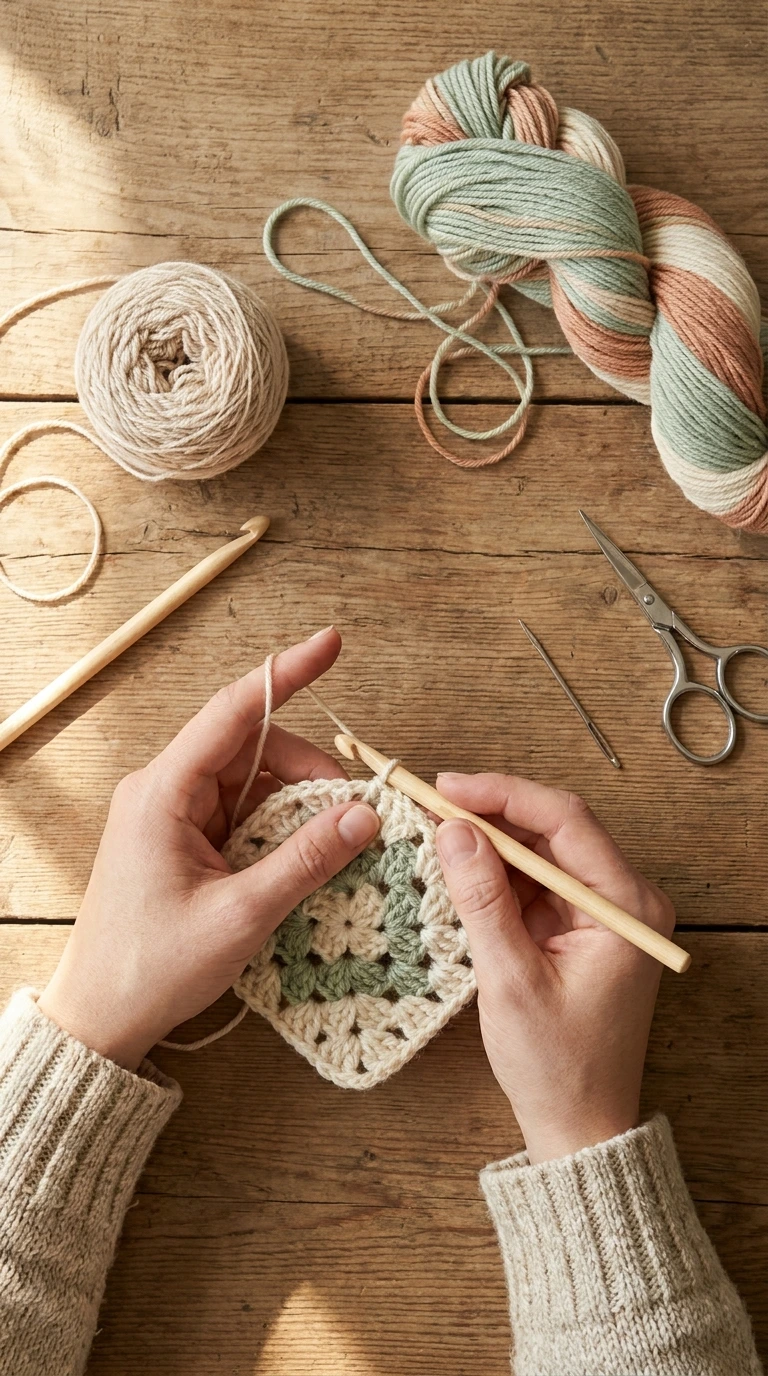
One of the best things about crochet is that the starter kit is tiny and cheap. You don’t need a huge stash of supplies — just four simple things:
- One crochet hook — a 5mm (H/8) hook is the sweet spot for beginners.
- One ball of yarn — choose a light, solid color in worsted weight (medium #4), 100% acrylic. Avoid fluffy or textured yarn at first; it hides your stitches.
- A yarn needle with a large eye, for weaving in ends.
- A pair of sharp scissors.
Beginner Tip: Smooth, medium-weight acrylic yarn in a light color is easiest to learn with. You’ll actually be able to see each stitch clearly — which makes a huge difference when you’re just starting out.
Quick Word on UK vs US Terms
Before you dive into tutorials, know this: crochet has two naming systems — UK and US. The same stitch can have a different name depending on which one a pattern uses. It sounds confusing at first, but once you know to check, it becomes second nature.
| US Term | UK Term |
|---|---|
| Single Crochet (sc) | Double Crochet (dc) |
| Half Double Crochet (hdc) | Half Treble (htr) |
| Double Crochet (dc) | Treble Crochet (tr) |
Always check which system a pattern is using before you start — it’ll save you a lot of confusion later.
Learning the Basic Stitches
Every crochet project, no matter how advanced, is built from a handful of core stitches. Master these and you can make almost anything:
- Slip Knot & Chain Stitch — the foundation of every project.
- Single Crochet — the shortest, tightest stitch. Great for amigurumi and dense fabric.
- Half Double Crochet — a nice middle-ground stitch, quick to work up.
- Double Crochet — taller and faster, popular for blankets and garments.
Don’t try to learn them all in one sitting. Practice one stitch until it feels natural before moving to the next. Counting your stitches and rows as you go is one of the most important habits to build early — it keeps your edges straight and your project on track.
Beginner Tip: Use a stitch marker (or even a scrap of contrasting yarn) to mark your first stitch in every row. It’s a small habit that saves a lot of frustration.
Crocheting in Rows vs. In the Round
There are two main ways projects are built:
- In rows — back and forth, like a dishcloth or scarf.
- In the round — worked in a circle outward, like a granny square or a stuffed toy.
Understanding which method a project uses will help you pick your very first pattern with confidence.
5 Simple First Projects
Once you’re comfortable with the basics, it’s time to make something real. Here are beginner-friendly projects that build confidence without overwhelming you:
- A granny square — the classic starter project, made in the round.
- A simple scarf — worked in straight rows using single crochet.
- A flat circle — teaches you how increases work.
- A crochet heart appliqué — small, quick, and satisfying.
- A basic beanie — a great “graduation project” once you’re feeling confident.
Ready to Start Your First Stitch?
Grab your hook and yarn, bookmark this page, and come back anytime you need a refresher. Every expert crocheter started with a single chain stitch — yours starts today.
Final Thoughts
Crochet isn’t a race. Take your time with each stitch, don’t be afraid to rip out rows and try again, and remember that every wobbly first square is a step toward something beautiful. Enjoy the process — that’s really what this craft is all about.
Published in Beginner Guides & Stitch Tutorials — your starting point for all things crochet.