
Crochet Baby Clothes: The Complete Beginner-Friendly Crochet Baby Sweater Pattern (0-24 Months)
Crochet Baby Clothes: The Ultimate Guide + Free Crochet Baby Sweater Pattern (0–24 Months)
If you’ve been searching for the perfect crochet baby clothes project, you’ve landed in the right place. As an expert crochet pattern writer with over 20 years of experience designing crochet baby clothes for newborns through toddlers, I’m sharing my complete, beginner-friendly Crochet Baby Sweater pattern below — the exact pattern shown step-by-step, plus everything you need to know about making crochet baby clothes safely, quickly, and beautifully.
This guide covers every question people ask about crochet baby clothes: what to crochet for a newborn, what you can finish in an hour, the safest yarn for crochet baby clothes, and at what age a child can start crocheting their own crochet baby clothes. Then we go step-by-step through the full sweater pattern — yoke, body, sleeves, ribbing, and the optional bear appliqué.
In this crochet baby clothes guide:
- Everything you need to know before you start making crochet baby clothes
- Common questions about crochet baby clothes (answered by an expert)
- Materials & tools for this crochet baby clothes project
- Abbreviations chart
- Full round-by-round pattern: Yoke, Body, Arms, Ribbing, Bear Appliqué
- Assembly, finishing, troubleshooting, color variations, and care instructions
Why Crochet Baby Clothes? An Expert’s Perspective
After two decades of designing crochet baby clothes, I can tell you that handmade garments remain some of the most requested baby shower and newborn gifts. Crochet baby clothes are soft, breathable, and — when made with the right yarn — perfectly safe for delicate baby skin. This particular pattern is one of the most popular crochet baby clothes projects I teach because it’s a genuinely beginner-friendly design that still looks polished enough for a special occasion.
Ready to Start Your Crochet Baby Clothes Project? The Pattern
Now that you understand the basics of safe, beginner-friendly crochet baby clothes, let’s get into the exact pattern — reproduced in full detail so you can follow along and make your own version of these crochet baby clothes from start to finish.
Pattern: Baby Sweater — SitnCrochet
Level: Beginner friendly | Hook: 5mm (H/8) | Sizes: 0–24 months
Pattern notes: Neck size is the same for all sizes. Ch 1 does not count as a stitch. We use a 5mm crochet hook throughout the sweater. All increases are done in the 4 corners only. The bear appliqué is optional. To make a size smaller, consider going down a hook size. Since it’s a scrap-yarn project, you’ll change yarn color at the end of every row.
1. Materials List (exact amounts)
| Item | Amount / Detail |
|---|---|
| Worsted weight yarn (Color A – main body/scrap colors) | ~40 grams total (varies by size; scrap-yarn friendly) |
| Worsted weight yarn (Color B – contrast trim: neck, cuffs, hem) | ~15 grams |
| Worsted weight yarn (Color C – bear appliqué, optional) | ~5 grams tan/brown scrap |
| Yarn for embroidered bear face (optional) | Small scrap black/dark yarn |
2. Tools Needed
- 5mm (H/8) crochet hook
- Scissors
- Yarn/tapestry needle (for weaving in ends and sewing on appliqué)
- Stitch markers (at least 4–5, for marking the 4 yoke corners and round starts)
- Measuring tape (for checking gauge and final measurements)
3. Gauge & Final Measurements
Gauge: 15 stitches x 10 rows = 4″ x 4″
| Size | Neck Opening | Neck to Bottom Band | Chest |
|---|---|---|---|
| 0-3 months | 5″ | 9″ | 9″ |
(Neck opening stays 5″ for all sizes; body length and chest scale up per the round counts below.)
4. Abbreviations Chart
| Abbreviation | Meaning |
|---|---|
| Ch | Chain |
| Slst | Slip stitch |
| Sc | Single crochet |
| Hdc | Half double crochet |
| Incr / Inc | Increase |
| Cont | Continue |
| Rep | Repeat |
Step-by-Step Construction of Your Crochet Baby Clothes: The Yoke
Round-by-Round: The Yoke Strip
Row 1: Ch 6, working in the back bump of the chain, slst all the way down. Stitch count: 5 stitches. Ch 1, turn.
Row 2: Slst in the back loop only of the previous row, ch 1, turn. Stitch count: 5 stitches (stays constant).
Rows 3–64: Repeat Row 2 until you reach row 64. Stitch count: 5 stitches every row.
Row 1: [ch][ch][ch][ch][ch][ch] -> slst back bump -> 5 sts Row 2-64: slst (back loop only) x5 -> ch1, turn -> repeat ______________________________ |__|__|__|__|__| <- 5-st wide ridged strip |__|__|__|__|__| (worked to 64 rows long) |__|__|__|__|__|
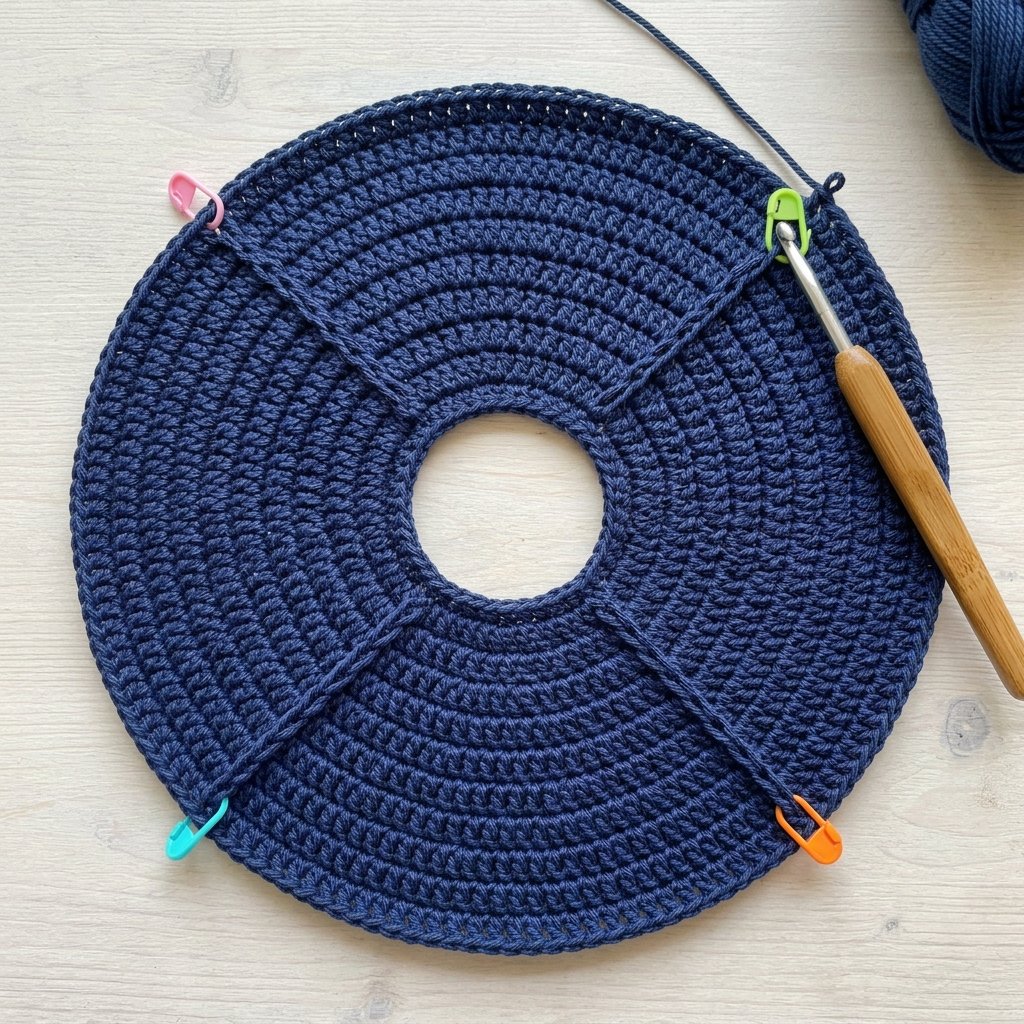
At the end of Row 64, connect the two short ends of the strip together and place a sc in the side slst of the yoke to join it into a loop. This ridged strip becomes the neckband of your crochet baby clothes sweater.
Dividing the Yoke
Place stitch markers in the following stitches around the joined loop: 12th, 20th, 12th, 20th. After placing the first marker in the 12th stitch, start counting from 1 again to place the next marker 20 stitches later, and repeat the 12/20 pattern around. These four markers represent the two front/back panels (12 sts) and two sleeve sections (20 sts) of your crochet baby clothes sweater.
Building the Body of Your Crochet Baby Clothes Sweater
Round 1: Ch1, in the same stitch place a hdc, hdc — this is your first increase, worked in the marked stitch. Continue to hdc in the following stitches, and increase (hdc, hdc in same st) in every stitch that has a stitch marker. At the end of the round, slst to the first hdc you made, ch1, and start Round 2. Approximate stitch count: starting stitch count + 4 (one increase repeat at each of the 4 marked corners).
Increase only in the 4 marked corner stitches every round — never anywhere else in the row. Move your stitch marker up into the new corner stitch each round so you don’t lose track.
Yoke Round Count by Size
| Size | Total Yoke Rounds |
|---|---|
| 0-3 months | 8 rounds |
| 3-6 months | 11 rounds |
| 6-9 months | 12 rounds |
| 9-12 months | 13 rounds |
| 12-15 months | 14 rounds |
| 15-18 months | 14 rounds |
| 18-21 months | 16 rounds |
| 21-24 months | 17 rounds |
Remember, you don’t have to stick exactly to these round counts — if the fit runs too large or small for your baby, feel free to go up or down a size.
Separating the Yoke (Underarms)
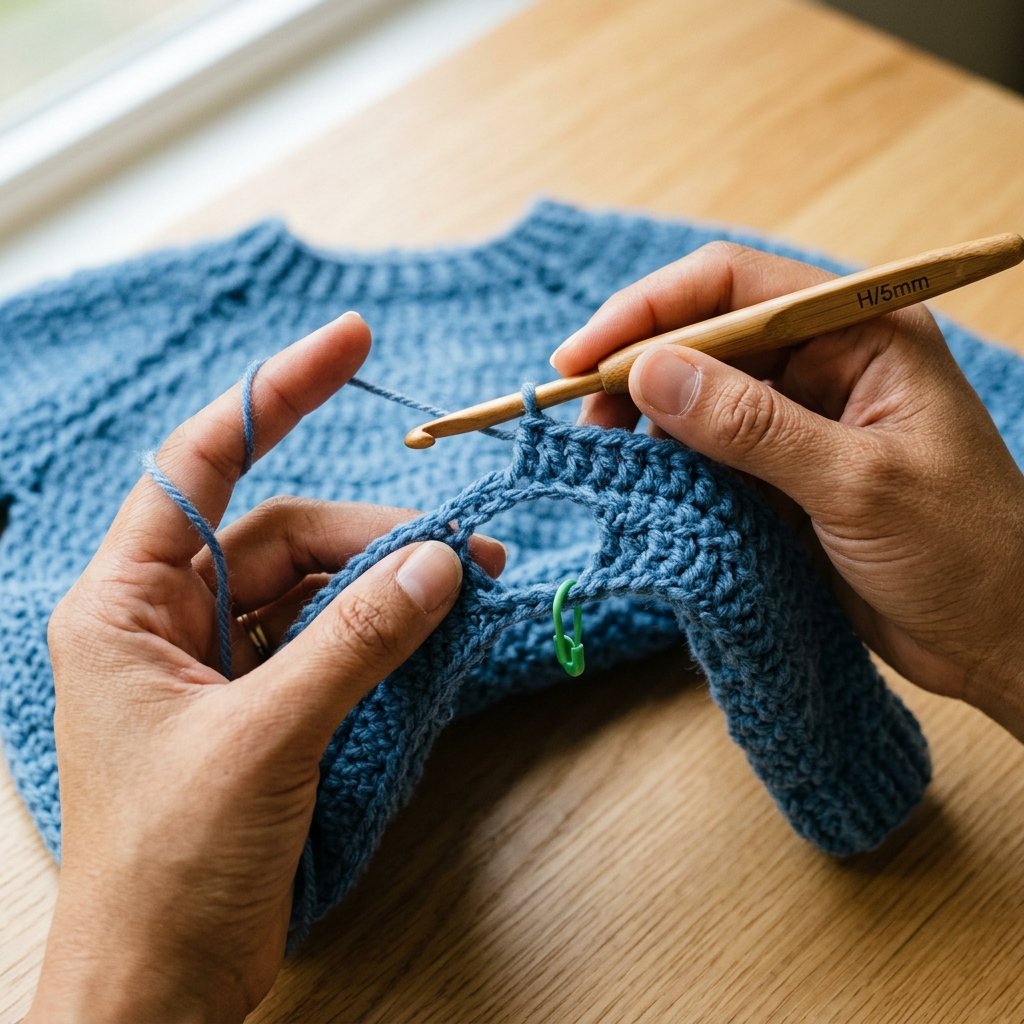
Once you finish the required number of yoke rounds for your size, slst to join the last round. Ch1 and hdc in the same stitch, then chain 4 (this creates the underarm gap). Feel free to chain more if the armhole is too tight for the baby. After making the chain, hdc in the next 2 sts past the chain, then continue to hdc to the next corner.
When you reach the next corner, chain another 4, hdc in the last corner stitch, and proceed to hdc to where we began. When you reach the starting point of the round, do not slst to join — instead hdc on top of the first hdc you made and continue, to make the join seamless.
Be sure to leave a stitch marker so you can keep count of your rows/rounds.
Body Rounds by Size
| Size | Body Rounds |
|---|---|
| 0-3 months | 8 rounds |
| 3-6 months | 11 rounds |
| 6-9 months | 12 rounds |
| 9-12 months | 13 rounds |
| 12-15 months | 14 rounds |
| 15-18 months | 14 rounds |
| 18-21 months | 16 rounds |
| 21-24 months | 17 rounds |
Bottom Ribbing
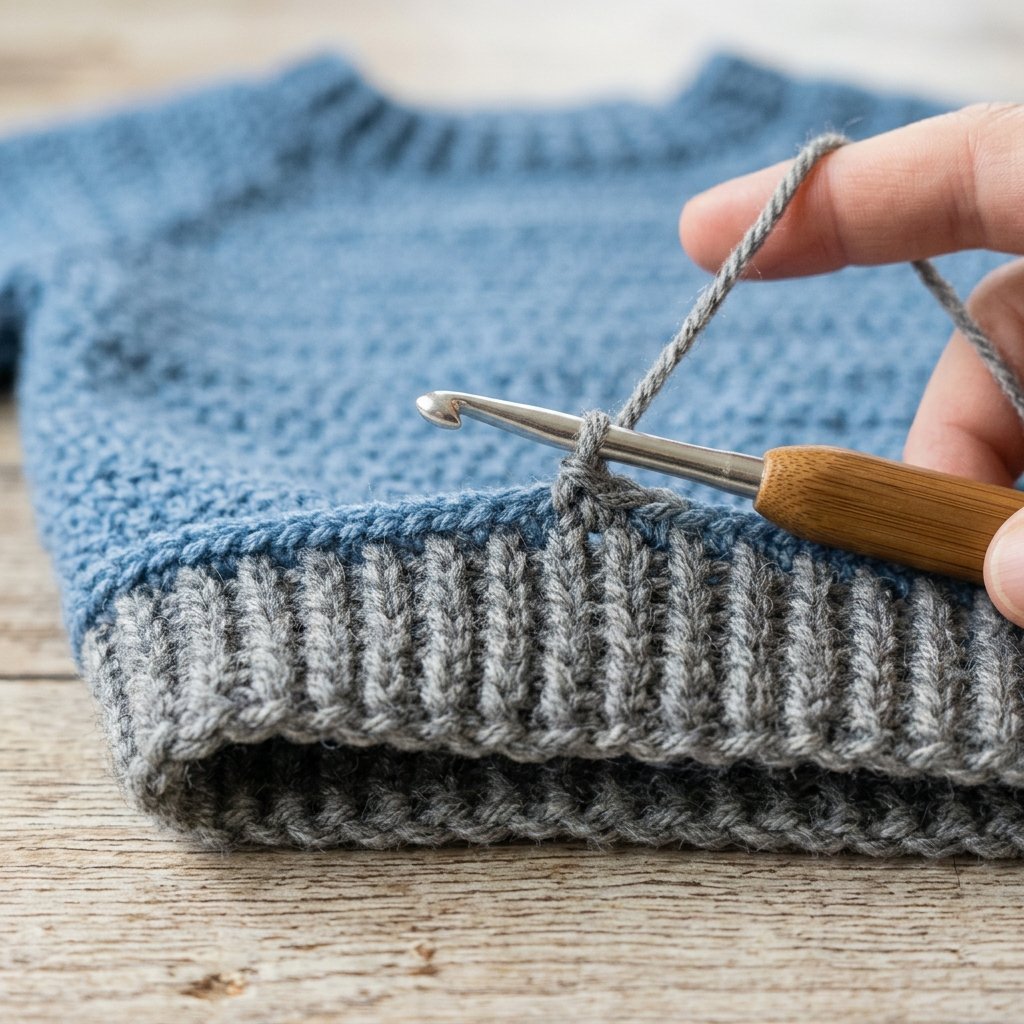
When you’ve completed the required body rounds, chain 5, then slst into the back bump of the chain to the base of the chain you’re coming out of, then slst into the next stitch to start the next row.
Turn, then slst in the back loop of the 4 slst, ch1 and turn. Continue this ribbing pattern all the way around the whole sweater until the end. This creates the same ridged-texture trim used on the neckband, giving your crochet baby clothes sweater a matching finish top and bottom.
Crochet Arms
Connect your yarn to the underarm section. Hdc all the way around the armhole opening to where you started the round; when you reach the end, do not slst to join — continue hdc-ing in a spiral instead. Keep a stitch marker in place to track your rounds.
Arm Rounds by Size
| Size | Arm Rounds |
|---|---|
| 0-3 months | 8 rounds |
| 3-6 months | 11 rounds |
| 6-9 months | 12 rounds |
| 9-12 months | 13 rounds |
| 12-15 months | 14 rounds |
| 15-18 months | 14 rounds |
| 18-21 months | 16 rounds |
| 21-24 months | 17 rounds |
Sleeve Cuff Ribbing
Once you’ve reached the total round count for the arm on your size, ch 5, slst into the back bump of the chain to the base of the chain you’re coming out of, then slst into the next stitch to start the next row. Turn, and slst in the back loop of the 4 slst, ch1, turn. Repeat this ribbing pattern all the way around the cuff. Repeat this entire arm + cuff process for the second sleeve. Weave in all ends.
Crochet Bear Appliqué (Optional)
This adorable optional finishing touch is one of my favorite details to add to crochet baby clothes for extra charm.
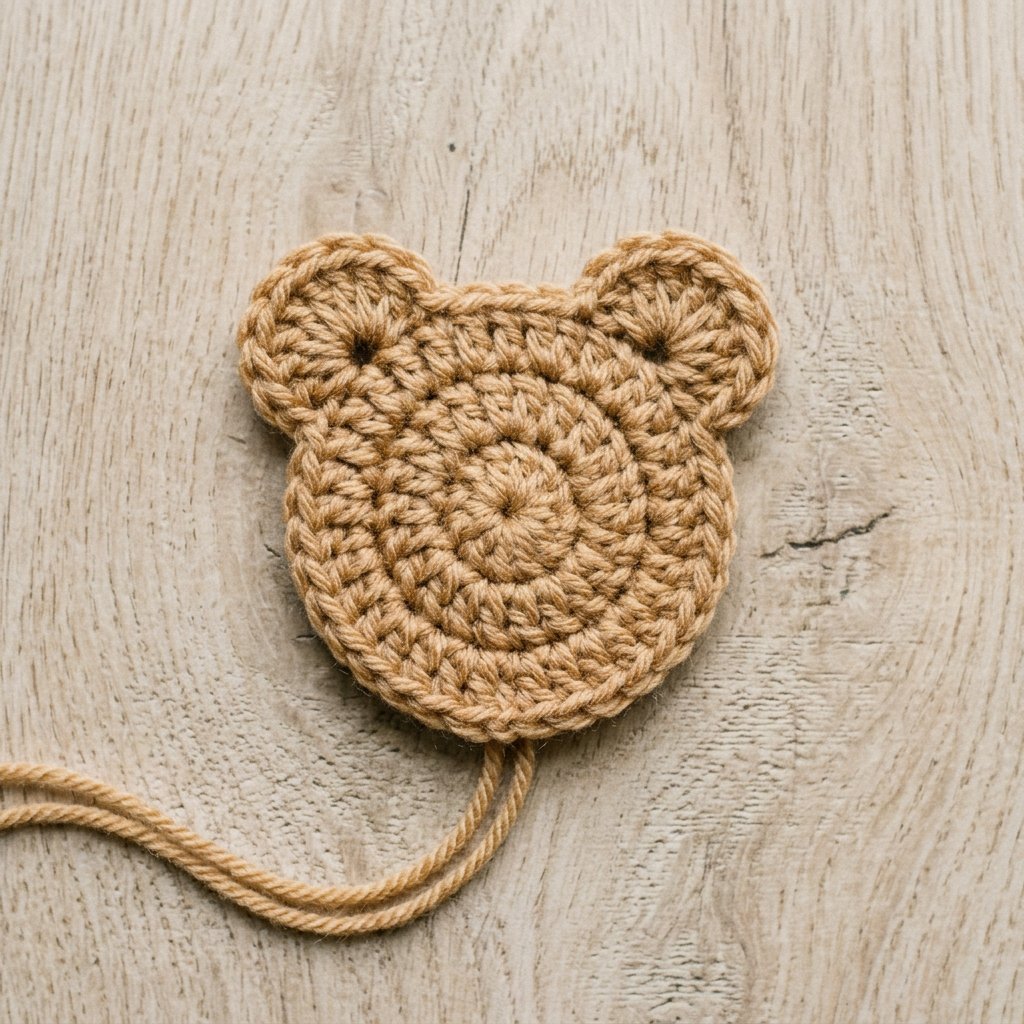
- Make a magic ring, ch2 (the ch2 does not count as a stitch).
- In the ring, place 12 double crochet, slst to close.
- Ch2, place 2 double crochet on top of each previous double crochet, for a total of 24. Slst to join.
- Ch2, place 5 double crochet and a single crochet in the same stitch, then slst in the next 4 stitches.
- In the 5th stitch, place 5 double crochet and a single crochet, slst all the way around, ch1, and cut, leaving a long tail to sew the bear appliqué onto the sweater.
Connect the bear appliqué to your sweater and you are all done with your crochet baby clothes project!
Assembly Instructions for Your Crochet Baby Clothes
- Join the 64-row ridged strip into a loop and place your 4 corner markers (12th/20th spacing) — this is your neckline.
- Work the raglan yoke increases at all 4 corners for the number of rounds matching your chosen size.
- Separate the yoke into body vs. sleeves at the underarms using the chain-4 gaps.
- Complete the body rounds, then add the bottom ribbing.
- Rejoin yarn at each underarm and work the sleeve rounds, then add cuff ribbing to both sleeves.
- Weave in all loose ends with a tapestry needle.
- If desired, make and stitch on the bear appliqué to the front of the sweater using the long tail left from finishing the appliqué.
Finishing Techniques for Crochet Baby Clothes
- Weave in every yarn tail along the wrong side of the fabric for at least 1.5–2 inches, splitting the yarn ply where possible so ends don’t work loose in the wash — essential for any crochet baby clothes that will be laundered often.
- Light steam-block the finished sweater (avoid direct heat on acrylic yarn) to even out stitch tension, especially around the ribbing.
- Trim yarn tails only after a wash-test to make sure your crochet baby clothes ends stay secure.
Yarn Color Swap Notes for Crochet Baby Clothes Variations
| Variation | Color Swap Idea |
|---|---|
| Original (pattern shown) | Gray trim (neck, cuffs, hem) + 3-tone blue ombré body |
| Neutral gift set | Cream trim + sage green and oatmeal body stripes |
| Girl-coded scrap version | Blush pink trim + dusty rose/mauve/cream body |
| Gender-neutral | Mustard yellow trim + gray and white body |
| Bear appliqué | Tan or brown scrap yarn keeps the classic look on any colorway |
Since this is designed as a scrap-yarn project, changing colors at the end of every row is part of the pattern — it’s a great way to use up leftover yarn from other crochet baby clothes projects.
Estimated Time to Complete (For a Beginner)
| Section | Estimated Time (Beginner Pace) |
|---|---|
| Yoke strip (64 rows) + joining | 1.5–2 hours |
| Raglan yoke increases | 1–1.5 hours |
| Body + bottom ribbing | 1.5–2 hours |
| Both sleeves + cuffs | 1.5–2 hours |
| Bear appliqué (optional) | 20–30 minutes |
| Total | 6–8 hours, typically spread over 2–4 sittings for a 0-3 month size |
Troubleshooting Your Crochet Baby Clothes Sweater
| Problem | Likely Cause | Fix |
|---|---|---|
| Neckline looks wavy or ruffled | Working into the wrong loop, or slst too loosely | Make sure you’re always working in the back loop only for rows 2-64, and keep tension even |
| Yoke corners don’t line up | Lost track of the marked increase stitches | Move your stitch markers into the new corner stitch at the end of every round |
| Armholes too tight for baby | Underarm chain too short | Chain more than 4 at the underarm separation, as the pattern allows |
| Sweater is too big or small | Gauge doesn’t match, or wrong size’s round count used | Check your 4″x4″ gauge swatch first; size up or down a hook size if needed |
| Ribbing curls | Ribbing worked too tightly or in the wrong loop | Relax tension slightly and confirm you’re using the back loop only technique |
| Color changes look messy | Ends not secured before switching yarn | Always finish the last stitch of a row with the new color, and weave in ends as you go |
Common Mistakes in Crochet Baby Clothes (and How to Fix Them)
- Mistake: Counting the turning chain as a stitch. Fix: Remember — in this pattern, ch1 never counts as a stitch.
- Mistake: Increasing in random stitches instead of just the 4 marked corners. Fix: Only increase where your stitch markers are placed; this keeps the raglan shaping of your crochet baby clothes symmetrical.
- Mistake: Slip stitching to join at the underarm separation round. Fix: At the separation round, don’t slst to join — hdc on top of the first hdc instead, for a seamless join.
- Mistake: Using scratchy or non-washable yarn. Fix: Stick to soft, machine-washable yarns appropriate for crochet baby clothes.
Care Instructions for Your Finished Crochet Baby Clothes
- Machine wash on a gentle/delicate cycle in cold water, or hand wash for extra care.
- Lay flat to dry — avoid hanging, which can stretch crochet baby clothes out of shape, and avoid tumble drying on high heat.
- Store folded, not on a hanger, to preserve the shape of the yoke and ribbing.
- Check embellishments like the bear appliqué periodically to make sure stitching stays secure with wear and washing.
Frequently Asked Questions About Crochet Baby Clothes
Below I’ve answered the most common questions people search when they want to start making crochet baby clothes, based on real search data. What should I crochet for a newborn baby? For newborns, the best crochet baby clothes projects are simple, stretchy, and quick: hats, booties, cardigans, blanket wraps, and this crochet baby sweater (0-3 month size). Small crochet baby clothes pieces work up fast and use less yarn, so you can finish a full newborn set — sweater, hat, and booties — in a weekend. What is the easiest thing to crochet for babies? The easiest crochet baby clothes item for an absolute beginner is a simple hat or a garter-style blanket square, since both use only single crochet, half double crochet, and chain stitches — exactly the stitches used in this beginner sweater pattern. What is the best yarn to crochet for a newborn baby? For crochet baby clothes, soft, machine-washable yarns like 100% cotton, cotton-acrylic blends, or baby-specific acrylic yarns in a DK or worsted weight are ideal. They’re gentle on skin, easy to care for, and hold stitch definition well. Is crochet safe for newborns? Yes — crochet baby clothes are safe for newborns as long as you avoid loose buttons, long dangling ties, or embellishments smaller than 1.5 inches that could pose a choking hazard, and always supervise wear. What to crochet for NICU babies? NICU-friendly crochet baby clothes and accessories are typically preemie-sized hats, wraps, and cocoons made from ultra-soft, hypoallergenic cotton yarn, worked at a tight gauge with no loose embellishments, since NICU items must meet strict hospital safety guidelines. What yarn is not safe for babies? Avoid mohair, novelty eyelash yarns, and anything with loose fibers or beads/sequins for crochet baby clothes — these can shed, irritate skin, or become choking hazards. What can I crochet in 1 hour? In an hour you can typically finish smaller crochet baby clothes accessories like a newborn hat, a pair of booties, or a bear appliqué like the one in this pattern. What can I crochet in 30 minutes / 15 minutes / 2 hours? In 15–30 minutes, most crocheters can complete a small appliqué or a bib corner of crochet baby clothes. In 2 hours, an experienced crocheter can often finish a full newborn hat or booties set. A full sweater like this one usually takes several hours spread across a few sittings — see the time estimate section below. Can 12 year olds crochet? Absolutely. Many 12 year olds successfully make simple crochet baby clothes items with basic supervision, especially beginner-friendly patterns like this one that only use chain, slip stitch, single crochet, and half double crochet. What type of yarn is best for crocheting baby clothes? The best yarn for crochet baby clothes is a soft, worsted or DK weight cotton, bamboo, or acrylic-blend yarn that is machine washable and free of rough or scratchy fibers. Is 100% cotton yarn good for baby clothes? Yes — 100% cotton is one of the top choices for crochet baby clothes because it’s breathable, hypoallergenic, and holds up well to frequent washing, though it has less stretch than acrylic blends. What yarn is safest for babies? Soft, tightly-spun cotton or high-quality acrylic yarns labeled “baby soft” are considered the safest for crochet baby clothes since they minimize irritation and shedding. Is 100% acrylic yarn good for baby clothes? 100% acrylic can work for crochet baby clothes if it’s a soft, baby-specific acrylic — it’s affordable, colorfast, and machine washable, though some parents prefer natural fibers against sensitive skin. Why avoid acrylic yarn / Can I use acrylic yarn for baby clothes? Some crocheters avoid standard acrylic in crochet baby clothes because lower-quality acrylic can feel scratchy and isn’t as breathable as natural fiber, but premium “baby” acrylic yarns are specifically softened and widely used and considered safe. At what age can a child start crocheting? Most children can start learning basic crochet, including simple crochet baby clothes projects, around ages 7–10 with guidance, though this varies by individual fine motor development. What is the first thing a beginner should crochet? Beginners should start with a simple swatch or dishcloth to practice chain and single crochet before moving on to crochet baby clothes like this sweater, which builds on those same foundational stitches. Is crochet too hard for a 7 year old? Not necessarily — with patience and simple projects, many 7 year olds can learn basic stitches used in crochet baby clothes, though most benefit from an adult working alongside them at first. Is it easier to teach kids to crochet or knit? Most instructors find crochet easier to teach kids than knitting because it uses one hook instead of two needles and stitches are less likely to slip off, making it a gentler entry point before tackling more complex crochet baby clothes patterns. What are the disadvantages of crocheting? Crochet can take longer per square inch than knitting for some fabrics, and repetitive stitching in crochet baby clothes projects can cause hand fatigue, so it’s important to take breaks and stretch.
Final Thoughts on Crochet Baby Clothes
Whether this is your first time making crochet baby clothes or your fiftieth baby sweater, this pattern is designed to be approachable, adaptable across 8 sizes (0-24 months), and a wonderful way to use up scrap yarn. I hope this complete crochet baby clothes guide — from materials to finished garment — helps you crochet a sweater your baby (or the lucky recipient) will love. If you make this pattern, I’d love to hear how your crochet baby clothes turned out!